

How to Prevent Blocked Drains
How to Prevent Blocked Drains: The Complete Guide
Blocked drains are one of the most common drainage problems in the home, but many blockages can be prevented with a few simple changes to how you use and maintain your sinks, toilets, showers and outside drains.
Food waste, fats and oils, hair, wet wipes, leaves and other debris can gradually collect inside your drainage system and restrict the flow of water. In other cases, problems can develop because of ageing or damaged pipework, tree roots or poor maintenance.
Preventing these problems is usually much easier, cheaper and less disruptive than dealing with a serious blockage. This guide explains how to prevent blocked drains throughout your property and what warning signs you should look out for.
What Causes Blocked Drains?
A drain becomes blocked when something prevents wastewater from flowing freely through the pipe.
Some blockages happen suddenly because an object has entered the drainage system, but many develop gradually as material accumulates on the inside of the pipe.
Common causes include:
• Fats, oils and grease
• Food scraps
• Tea bags and coffee grounds
• Hair and soap residue
• Wet wipes and sanitary products
• Excessive toilet paper
• Leaves and garden debris
• Tree roots entering damaged drains
• Sediment and other debris
• Damaged, collapsed or ageing pipework
The best way to prevent blocked drains is to control what enters your drainage system and identify developing problems before they become serious.
Don't Put Food or Solid Waste Down Your Sink
Your kitchen sink should not be treated as a waste bin.
Food scraps can become trapped inside waste pipes and gradually combine with fats, grease and other material to create a blockage. Even relatively small pieces of food can contribute to a problem over time.
Before washing plates, pans and utensils, scrape leftover food into your food waste or general waste bin.
Avoid putting items such as these down your sink:
• Tea bags
• Coffee grounds
• Bones
• Poultry skin
• Fruit and vegetable peelings
• Fibrous vegetables
• Rice and pasta
• Other leftover food
Using a sink strainer or plug-hole guard is a simple way to catch food before it enters the waste pipe. Empty the strainer into your bin or food-waste container rather than washing the contents down the sink.
Never Pour Fats, Oils or Grease Down the Drain
Fats, oils and grease are some of the biggest causes of kitchen drain blockages.
Cooking fat may be liquid while it is hot, but as it travels through cooler pipework it can solidify and stick to the inside of the drain.
Repeatedly pouring fat down the sink creates layers of greasy material that gradually reduce the internal diameter of the pipe. Food and other debris can then stick to this material, making the blockage progressively worse.
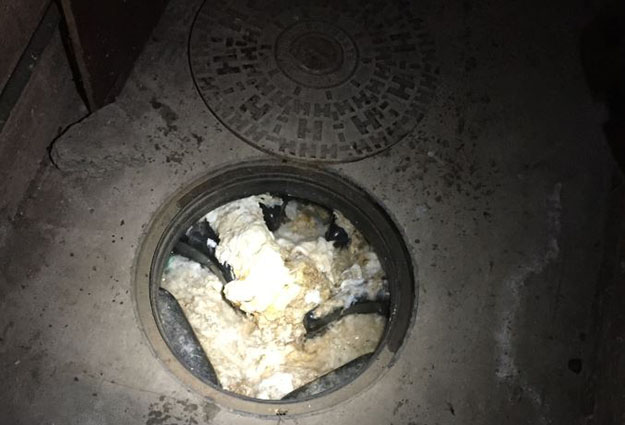
As the image above shows, fats and oils can build up inside a drain and significantly restrict the space available for wastewater to flow. If the build-up continues, the pipe can eventually become completely blocked.
Instead, allow cooking fats and oils to cool and dispose of them appropriately. Wipe greasy frying pans and cooking utensils with kitchen paper before washing them to prevent as much grease as possible from entering your drains.
Be Careful What You Flush Down the Toilet
Toilets are another major source of preventable drain blockages.
As a general rule, only human waste and toilet paper should be flushed.
Do not flush:
• Wet wipes
• Baby wipes
• Nappies
• Sanitary products
• Cotton buds
• Facial tissues
• Paper towels
• Dental floss
• Cleaning wipes
• Other household waste
Even products that appear relatively small can become trapped inside drainage pipes or combine with other material to create a much larger obstruction.
Keep a small bathroom bin nearby so there is an easy alternative to flushing waste down the toilet.
Stop Hair Going Down Bathroom Drains
Hair is a particularly common cause of blocked baths, showers and bathroom sinks.
Unlike many other substances entering a drain, hair does not simply dissolve in water. Individual strands can become caught inside the waste pipe and gradually combine with soap residue and other material.
Over time, this can create a dense blockage that causes water to drain increasingly slowly.
Use a hair catcher or drain guard over shower, bath and basin plug holes and remove collected hair regularly.
Use Drain Guards Inside and Outside Your Home
Drain guards are one of the simplest preventative measures you can take.
Inside your home, sink and shower strainers prevent food, hair and other solids from entering waste pipes.
Outside, properly fitted drain covers and grates help prevent leaves, litter, stones and other garden debris from entering gullies and drains.
A drain guard still needs regular attention. If debris is allowed to accumulate over it, water may not be able to reach the drain even though the pipe itself remains clear.
Check and clean drain guards regularly, particularly during periods of heavy rain and throughout autumn.
Protect Your Drains From Leaves in Autumn
Falling leaves can cause significant drainage problems during autumn, particularly when combined with heavy rainfall.
Leaves can cause problems in two ways.
Firstly, they can collect over drain covers and gullies. This prevents rainwater from entering the drainage system and can cause water to accumulate across patios, driveways and gardens.
Secondly, leaves can enter the drainage system itself. Once wet, they begin to break down and can collect inside pipes, potentially contributing to a blockage.
During autumn, regularly sweep leaves from areas surrounding your property rather than waiting for large amounts to accumulate.
Pay particular attention to:
• Drain covers
• Gullies
• Patios
• Driveways
• Paths
• Areas beneath trees
• Gutters
• Downpipes
Check Outside Drains and Gullies Regularly
Outside drains can easily be forgotten because they are not used as visibly as a kitchen sink or toilet.
Periodically inspect accessible drain covers and gullies around your property.
Remove leaves and other loose material before it enters the drainage system and look for standing water that does not disappear normally.
Standing water around a gully can be an early indication that water is struggling to flow away.
During heavy rainfall, checking how effectively outside drains cope with water can also reveal developing problems.
Keep Gutters and Downpipes Clear
Your drainage system does not begin at ground level.
Leaves, moss and other debris can accumulate in roof gutters and make their way into downpipes. A blocked gutter or downpipe can overflow during heavy rainfall and may also provide leaves with a direct route towards the drainage system below.
Check gutters periodically and remove accumulated debris where it is safe to do so.
Also check that downpipes are discharging correctly and are not obviously blocked.
Properties surrounded by trees may require more frequent gutter and drain maintenance during autumn.
Look After Your Drains During Wet Weather
Heavy rainfall puts additional pressure on drainage systems.
A drain that appears to work adequately during dry weather may struggle when it suddenly has to handle a much greater volume of water.
Before prolonged or heavy rain, check accessible outside drains and remove leaves, litter and other debris from around the covers.
After particularly heavy rainfall, look for:
• Standing water
• Water draining unusually slowly
• Overflowing gullies
• Unpleasant smells
• Water backing up
Recurring problems during wet weather can indicate that the drain requires cleaning, inspection or repair.
Protect Your Drains and Pipes During Winter
Cold weather creates additional problems for drains and pipework.
Standing water inside or around vulnerable pipes can freeze during sufficiently cold weather. As water freezes and expands, it can place additional pressure on pipework and joints.
Keeping drains clear before winter reduces areas where water can collect.
Exposed outdoor pipework also deserves particular attention. Check outdoor taps and pipes for leaks and, where appropriate, isolate and drain outdoor water supplies before prolonged freezing conditions.
Insulating vulnerable pipes in garages, lofts, outbuildings and other cold areas can provide additional protection.
Check for Leaking Pipes and Taps
A leak can be an indication that part of your plumbing system needs attention.
Regularly check visible pipework, connections and outdoor taps for signs of water.
Look for:
• Dripping
• Damp patches
• Water stains
• Corrosion
• Mould
• Unexpected moisture around pipes
Finding a small leak early can prevent a much more expensive problem later.
Inspect Older Drainage and Pipework
Not every blockage is caused by something that has been put down a sink or toilet.
Older drainage systems can deteriorate over time. Depending on the type and condition of the pipework, problems can include cracking, displaced joints, corrosion, deformation and sections of pipe becoming damaged.
Tree roots can also enter drains through cracks and defective joints. Once inside, roots can continue growing and restrict the flow through the pipe.
If your property has older drains or repeatedly suffers from blockages despite careful use, the problem may be structural rather than simply caused by everyday waste.
A CCTV drain survey can be used to inspect inside the drainage system and establish what is causing recurring problems.
Check Washing Machine and Appliance Connections
Washing machines and other water-using appliances should also form part of routine plumbing maintenance.
Inspect accessible hoses and connections periodically for cracking, deterioration, leaks or moisture.
Problems with appliance hoses may not directly cause a conventional blocked drain, but a failed hose or connection can release a substantial amount of water into the property.
If you notice deterioration, arrange for the affected component to be replaced rather than waiting for it to fail.
Know the Warning Signs of a Developing Blockage
Drain blockages often provide warning signs before the drain becomes completely obstructed.
Look out for:
• Water draining more slowly than usual
• Gurgling noises from sinks, toilets or showers
• Unpleasant smells from plug holes or drains
• Water levels rising in toilets
• Water backing up into another fixture
• Standing water around outside drains
• Repeated blockages in the same drain
• Several drains becoming slow at the same time
Do not ignore these symptoms. A minor restriction can often be dealt with more easily than a drain that has become completely blocked.
If several fixtures throughout the property begin experiencing problems simultaneously, this can indicate an issue further along the drainage system rather than an isolated blockage in one sink or toilet.
Maintain Your Drains Regularly
Good drainage maintenance is largely about preventing unwanted material from entering the system and paying attention to changes in performance.
As part of your routine home maintenance:
• Clean sink and shower strainers
• Remove hair from plug-hole guards
• Keep food waste out of kitchen sinks
• Dispose of fats and oils correctly
• Check outside drains for leaves and debris
• Keep gutters and downpipes clear
• Watch for leaks
• Investigate slow-draining water
• Pay attention to unusual smells and gurgling noises
These relatively simple habits can considerably reduce the likelihood of a serious blockage.
What Happens If You Ignore a Blocked Drain?
A blocked drain is more than an inconvenience. As the problem becomes worse, wastewater may remain stagnant inside the drainage system or begin backing up.
Potential consequences include unpleasant smells, hygiene problems, pests, leaks and flooding.
In more serious cases, dirty wastewater or sewage can overflow from toilets, sinks, gullies or drains and cause damage to flooring, furniture and other parts of the property.
Persistent leaks can also contribute to damp and deterioration of surrounding building materials.
If the blockage itself has been caused by damaged drainage, leaving the underlying problem unresolved may allow the condition of the pipe to deteriorate further.
When Should You Call a Drainage Professional?
Some minor drainage problems can be prevented through sensible household maintenance, but recurring or serious problems should be investigated professionally.
Consider getting your drains inspected if:
• A blockage keeps returning
• Several drains are affected
• Water repeatedly backs up
• Outside drains overflow
• There are persistent foul smells
• You suspect tree-root damage
• You have an older drainage system
• You suspect a collapsed or damaged pipe
• Basic preventative measures have not solved the problem
Professional drain cleaning can remove deposits and obstructions that ordinary household maintenance cannot reach.
Where the cause is unclear or a structural problem is suspected, a CCTV drain survey allows the inside of the drainage system to be inspected without unnecessary excavation.
Preventing Blocked Drains Is Better Than Dealing With an Emergency
Many blocked drains develop gradually.
Keeping food, grease, hair, wipes, leaves and other unwanted material out of your drainage system can prevent many everyday problems. Regularly checking outside drains, gutters and visible pipework can also help you identify developing issues before they become emergencies.
However, not every blockage is preventable. Tree roots, damaged pipes, ageing drainage and structural defects can all cause problems regardless of how carefully you use your drains.
If you notice slow drainage, gurgling, unpleasant smells, standing water or repeated blockages, getting the problem investigated early can prevent further inconvenience and damage.
RPD provides professional drain maintenance, drain unblocking and CCTV drain inspections throughout Wirral, Liverpool, Chester and the surrounding North West.
If you need help with a blocked drain or would like your drainage system inspected, call RPD on 0151 668 0833.
 Call Now
 Get A Quote
-1.png)
-2.png)
-3.png)
-4.png)
-5.png)
-6.png)
-7.png)